Blog
Strength Training for Men Over 40: A 3-Day Plan That Survives a Real Life
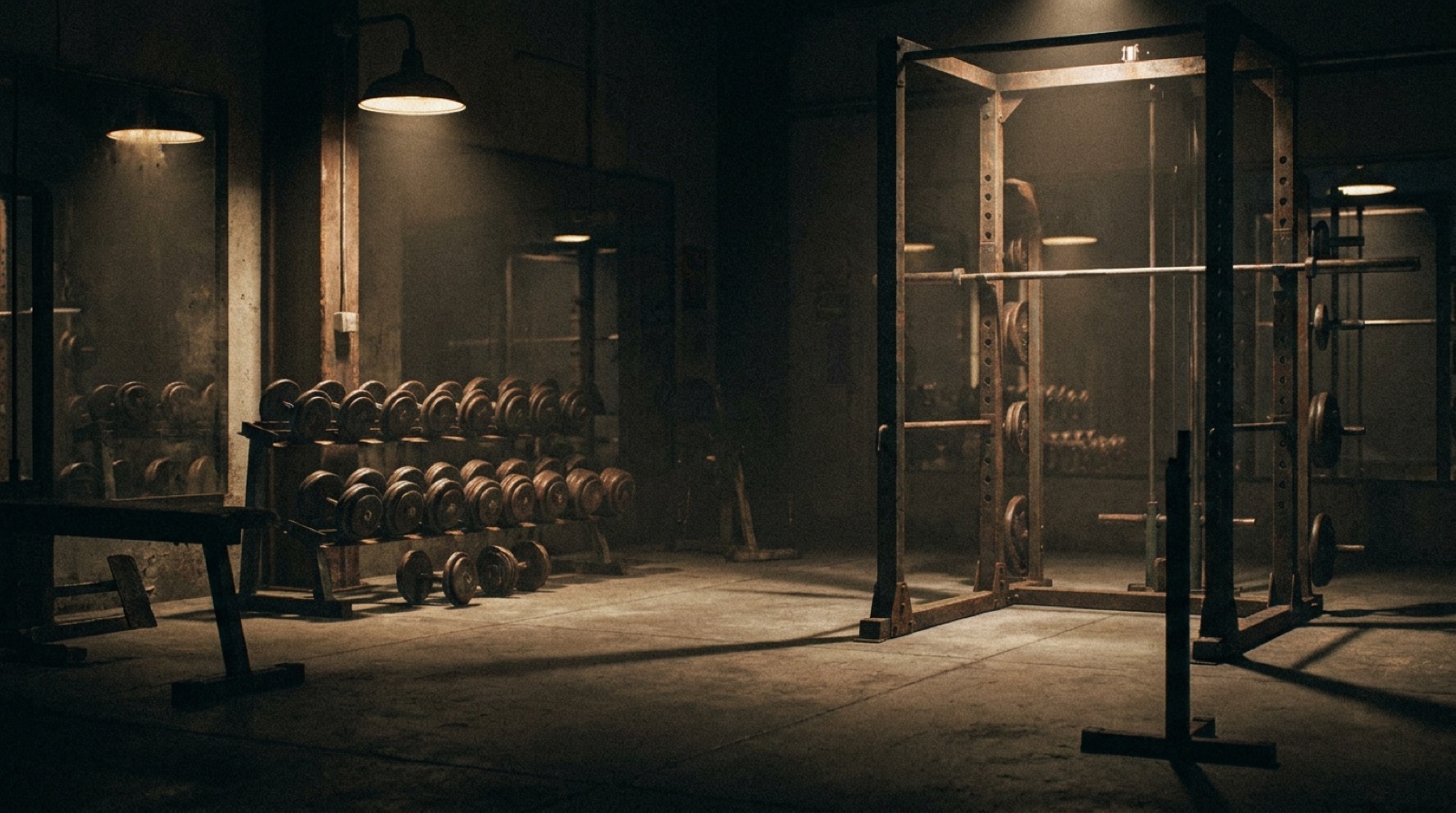
Here’s something I don’t hear said often enough: the gym-bros are mostly right.
The big, confident lads shouting about progressive overload, training each muscle two or three times a week, getting strong on the compound lifts, eating your protein — the actual science under all that is sound. The problem isn’t that they’re wrong. It’s that they’re impossible to relate to, because they’re built for a life you don’t have. Six days a week. Two-hour sessions. No job pulling at them, no kids, no mortgage, no forty-something back that complains when you look at a barbell.
So you can’t copy their schedule. But you can keep their principles. This is how to do strength training as a man over 40 with a real life — three days a week, around your actual commitments, on a back that’s seen better days.
What the gym-bros get right (keep this part)
Strip away the shouting and the science is simple and correct:
- Progressive overload. You get stronger by gradually asking your body to do a bit more over time — more weight, more reps, better control. This is the engine of every result.
- Frequency beats marathon sessions. Training a muscle two to three times a week beats blitzing it once and not touching it for seven days.
- Compound lifts do the heavy lifting. A handful of big movements — a hinge, a squat, a push, a pull — covers more ground than a dozen machines.
- Protein and recovery build the muscle. You don’t grow in the gym, you grow while you recover from it.
None of that is wrong. Hold onto all of it.
Why their version doesn’t survive your week
Here’s where it falls apart for the rest of us:
- The six-day split. Each muscle gets its own day. Miss two days to work or a sick kid and the whole thing collapses.
- Training to failure, every set. Great for soreness and missed sessions, not necessary for results, and rough on over-40 joints.
- No injury accommodation. Their programmes assume a 25-year-old’s spine and shoulders.
- The time. Two hours a day is a hobby for someone whose job is the gym. You have about forty-five minutes, three times a week, if you’re honest.
The fix isn’t to train harder. It’s to keep the principles and bin the schedule.
The 3-day full-body plan that actually fits
Three full-body sessions a week hits every major movement two to three times — exactly what the science says works — and leaves enough recovery, which is the real limiter after 40. Each session is the same simple shape: a hinge or squat, a push, a pull, and a carry or core. Around forty-five minutes.
| Day | Hinge / squat | Push | Pull | Finisher |
|---|---|---|---|---|
| Day A | Trap-bar deadlift | Dumbbell bench / incline press | Row | Loaded carry |
| Day B | Goblet or box squat | Overhead press | Chin-up / lat pulldown | Plank or carry |
| Day C | Romanian deadlift | Push-up or dip | Cable / band row | Core circuit |
Two to four working sets of each, stopping a rep or two short of failure — around RPE 8. I build everything around a trap bar rather than a straight bar, because I’ve got multiple bulging discs and the trap bar keeps the load where my back tolerates it. If your back is fine, a straight bar is fine. The point is to pick the version your joints will forgive, so you’re still lifting at 60.
That’s the whole template. It is deliberately boring, because boring is what survives a Wednesday when work ran late.
How to progress without wrecking yourself
Progressive overload doesn’t mean adding weight every session like a 20-year-old. After 40 it means nudging the load or the reps up when the last session felt comfortable at RPE 8, and holding steady when it didn’t. Some weeks you push; some weeks life is loud and you maintain. Every four to six weeks, take an easier week and let the joints catch up.
Strength after 40 is a long game. The bloke still training sensibly at 60 beats the one who went too hard at 42 and blew out a shoulder. Patience is the cheat code.
This is the training half of the comeback after 40. The full twelve-week version — with the exact sets, reps, phases and trackers — is The Reset. But you have the shape of it now, for free, in that table.
FAQ
How many days a week should a man over 40 lift weights?
Three is the sweet spot for most men over 40. Three full-body sessions hit each major movement two to three times a week — which is what drives strength and muscle — while leaving enough recovery, the real limiter after 40. Three you complete beats five you burn out on.
Is full-body better than a split after 40?
For most over-40 men with limited time, yes. Full-body three times a week trains every muscle two to three times weekly, which beats a split where each muscle gets hit once. Splits are built for people who can train five or six days; if you can only manage three, full-body gets far more from them.
Can you build muscle after 40?
Yes. The response slows but doesn’t switch off. With three full-body sessions a week, progressive overload, enough protein and proper recovery, you can add muscle in your 40s and 50s — and it’s the best single thing you can do for your metabolism and bones as you age.
How long should a workout be for a man over 40?
About 45 minutes to an hour, three times a week. A focused session of a hinge or squat, a push, a pull and a carry, done with real effort, is plenty. Longer usually means too much rest or too much fluff, not better training.
Do you need to train to failure after 40?
No, and you probably shouldn’t. Stopping a rep or two short — around RPE 8 — gives you nearly all the benefit with far less joint stress and recovery cost. Training to failure after 40 mostly buys you a missed session later in the week.
Is it safe to lift weights with a bad back?
Often yes, with the right exercise choices and a doctor’s clearance. I train around bulging discs with a trap bar instead of a straight bar and work at RPE 8 rather than to failure. Sensible lifting tends to build a more resilient back than avoiding it — but clear anything serious with a professional first.